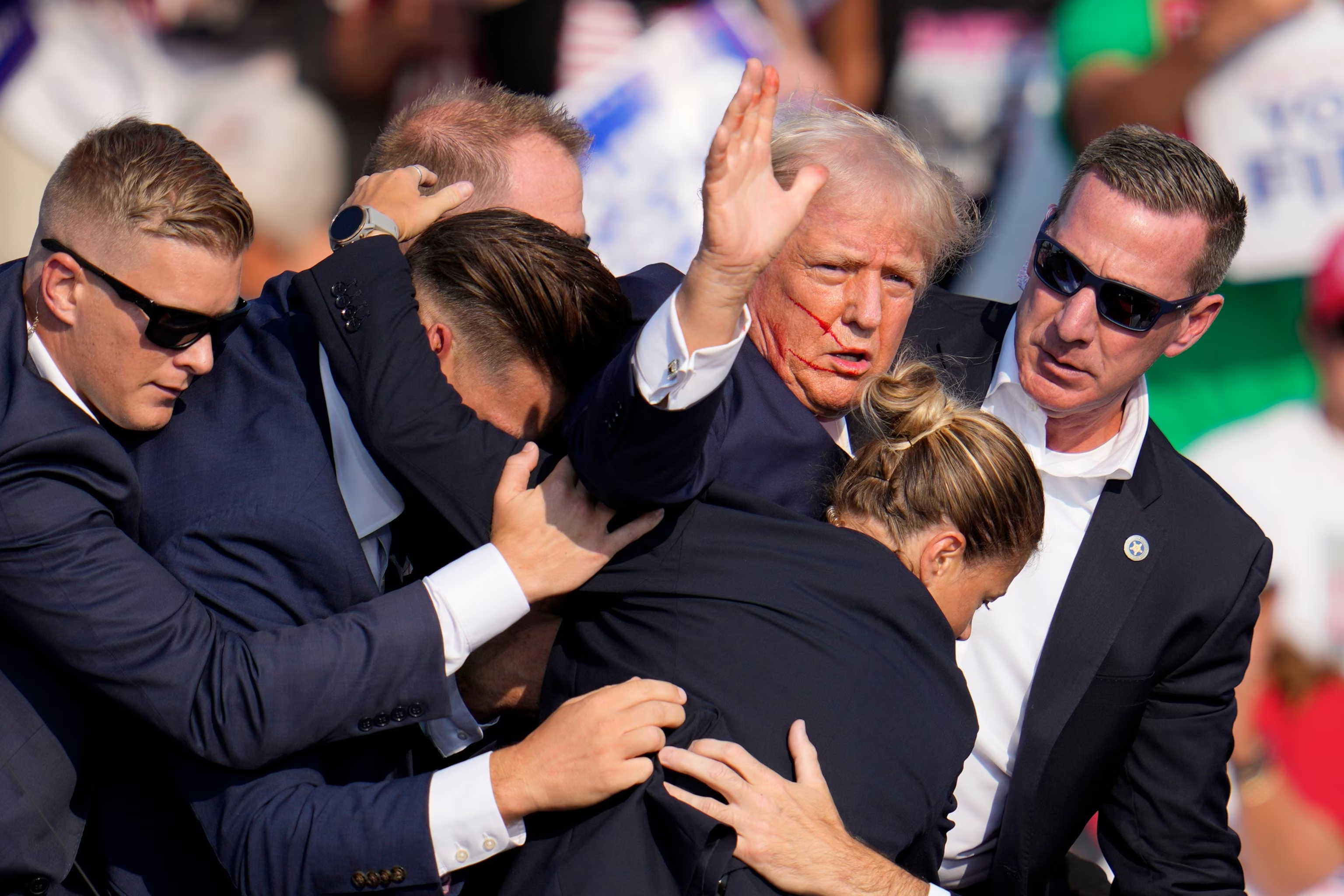
July 13, 2024 — Butler, Pennsylvania
On July 13, 2024, former U.S. President and Republican presidential nominee Donald Trump survived an assassination attempt during a campaign rally in Butler, Pennsylvania. The incident, in which a gunman opened fire from a rooftop, has triggered intense legal scrutiny and raised pressing concerns over political violence, public safety, and government accountability.

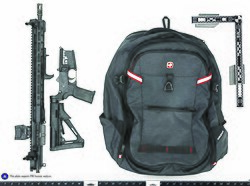
The shooter, identified as 20-year-old Thomas Matthew Crooks, fired eight rounds from an AR-15–style rifle, injuring Trump in his right ear and killing one attendee, firefighter Corey Comperatore, who died protecting his family. Two others were critically injured. Crooks was killed by a Secret Service sniper seconds after the attack.
Legally, Crooks’s conduct constitutes multiple felonies under both federal and Pennsylvania law—including attempted assassination of a presidential candidate, use of a firearm in a crime of violence, and first-degree murder. Had Crooks survived, he would have faced federal charges under 18 U.S.C. § 351, which criminalizes attacks on major political candidates and carries potential life imprisonment or the death penalty.
The incident is now widely regarded as the most significant security breach since the 1981 attempt on President Ronald Reagan. The Secret Service’s failure to detect and neutralize Crooks, despite prior sightings and warnings, has prompted bipartisan criticism.
Secret Service Director Kimberly Cheatle testified before Congress on July 22 but resigned the following day amid mounting calls for accountability. President Joe Biden ordered an independent review of the security lapse, underscoring the federal government’s legal duty to protect candidates under Secret Service protocols.
Preparation by the Shooter
July 7, 2024: Crooks visits the Butler Farm Show grounds, registering to attend the rally.
July 12, 2024: He practices at a shooting range with a DPMS Panther Arms AR-15–style rifle, chambered in 5.56×45mm NATO, purchased from his father.
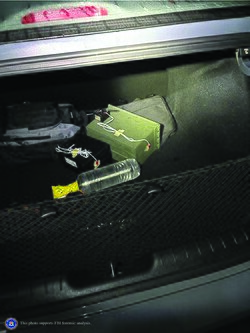
July 13, 2024: Crooks buys a ladder and ammunition, flies a drone over the rally site, and prepares an explosive device in his car.
Events on July 13, 2024
3:35 p.m.: Crooks arrives at the rally site.
3:50 p.m.: Crooks flies a drone to scout the rooftop.
4:26–5:54 p.m.: Law enforcement observes Crooks behaving suspiciously, but he evades immediate capture.
6:06 p.m.: Crooks scales an air-conditioning unit to access the roof of the AGR International complex.
6:11:33 p.m.: Crooks fires the first of eight shots. Trump is grazed on the right ear, while one attendee, Corey Comperatore, is fatally shot. Two others are critically injured.
6:11:37–6:11:49 p.m.: Crooks continues firing until a Butler County officer disables his rifle, and a Secret Service sniper fatally shoots Crooks 16 seconds after he begins shooting.
6:12–6:14 p.m.: Trump is escorted offstage to a vehicle and taken to Butler Memorial Hospital for examination.
Despite the immediate danger, Trump demonstrated composure and presence of mind in multiple ways:
Rapid Reaction and Evasion:
After the first bullet grazed his right ear, Trump instinctively ducked behind the lectern, minimizing exposure.
Use of Environment for Self-Protection:
Trump credited a large statistics chart on stage with deflecting the bullet from a direct headshot, turning his head toward it just before the first shot.
Psychological Resilience and Public Symbolism:
After being escorted offstage, Trump paused to put on his shoes, then raised his fist and mouthed “Fight! Fight! Fight!” to the crowd.
The gesture, with visible blood on his ear, became a defining image of his 2024 campaign, signaling defiance and strength.
Control under Stress:
He refused a stretcher, walked with Secret Service protection, and remained composed while traveling to the hospital, later issuing public statements that reassured supporters.
Overall, Trump’s conduct combined quick self-protection, environmental awareness, psychological resilience, and media-savvy communication, making his response to the crisis a central narrative of the event.
The assassination attempt exposes the growing intersection between domestic terrorism, gun laws, and political extremism. Crooks legally obtained the rifle through his father, raising renewed debate over firearm access, background checks, and family liability.
Misinformation and conspiracy theories proliferated online within hours, raising concerns about social media platforms’ legal responsibilities in preventing harmful content during national crises. Lawmakers are considering whether additional federal legislation on election security is necessary, including expanded candidate protection and restrictions on drone surveillance near campaign venues.
Meanwhile, Comperatore’s death has been legally classified as a homicide, and his family may pursue civil claims against the government for failure to provide adequate security, raising complex questions of sovereign immunity and federal liability.
Trump returned to public life just two days later at the Republican National Convention, bandaged but resolute, reinforcing the “Fight!” imagery.
Media and entertainment programming adapted to the incident, with certain broadcasts canceled or edited in response to public sensitivity.
International and domestic reactions emphasized condemnation of political violence, highlighting the global attention the event drew.
This attempted assassination is not only a matter of criminal law but also a turning point in the legal framework governing political security, gun regulation, and election integrity. Trump’s immediate response underscored personal resilience under threat, while the incident highlighted systemic gaps in protective measures, the legal ramifications of firearm access, and the challenges of misinformation in the digital era.
As investigations continue, the balance between public access to candidates and the government’s legal duty to protect them remains a central challenge for American democracy.


Comments
Be the first to comment
Leave a Comment